High-Risk Employee Termination: A Practical Planning Guide for Employers
High risk employee termination planning decides whether a firing ends quietly or turns into an incident. The meeting itself is rarely where things fail. The gaps around it are: access that stays live, a room nobody chose on purpose, a plan that exists only in one person’s head.
Picture the manager’s calendar on a Thursday morning. One entry reads “10:30, quick sync.” It isn’t a sync. It’s the termination of an employee who has made two comments about “making people pay” and still has a badge that opens every door on the floor. Nobody on that floor knows.
This guide covers how to rate the risk, build a timeline, run the meeting, and manage the weeks after. It’s written for HR leaders, office managers, and business owners who need to get this right the first time.

What is high risk employee termination planning?
High risk employee termination planning is the process of preparing for the dismissal of a worker who may respond with violence, threats, harassment, theft, or sabotage. It covers the legal review, the meeting setup, the security presence, the access shutoff, and the follow-up. The goal is to protect people first and the business second.
Notice what that definition leaves out: job title, tenure, and how “nice” the person seems. Plenty of quiet, long-serving employees have taken a dismissal badly, and plenty of loud ones have left without incident. Judge behavior you can describe, not personality you can only sense.
Why high risk employee termination planning matters
Three reasons, and none of them are dramatic.
First, employers have a duty to keep the workplace reasonably safe. In the United States, OSHA’s General Duty Clause expects employers to address recognized hazards, and the agency’s workplace violence guidance is a useful starting point. A known, specific threat from a departing employee can fall into that category. Your attorney can tell you how it applies in your state.
Second, the cost of a bad exit goes beyond the worst case. Data deleted on the way out, a customer list copied to a personal drive, a scene in the lobby that clients watch: these are far more common than violence, and each one costs real money.
Third, a plan protects the manager. The person delivering the news is the most likely target of any anger. They shouldn’t be improvising.
Step 1: Rate the risk before anything else
Most guides tell you to “assess the risk” and stop there. That leaves you guessing. Use a simple three-tier scale instead.
| Tier | What you’ve seen | What it means for the plan |
|---|---|---|
| Tier 1: Low | Conflict or poor performance, but no threats, no aggression, no unusual access | Standard termination. A second person in the room and access shut off on schedule. |
| Tier 2: Elevated | Hostile outbursts, grievance fixation, intimidation, or sensitive system access combined with obvious resentment | Written plan, security briefed, escort arranged, access cut at the start of the meeting. |
| Tier 3: High | Direct or implied threats, references to weapons, violence history, stalking behavior, or a protective order involving a coworker | Professional security on site, law enforcement notified where appropriate, legal counsel involved, and a post-exit monitoring period. |
Score the person on what’s documented. If you can’t point to a date, a witness, or a message, it doesn’t count toward the tier. And if you’re torn between two tiers, pick the higher one. Over-preparing costs a few hours. Under-preparing can cost far more.
Warning signs worth documenting
Look for patterns, not single bad days. These signals usually move someone up a tier:
- Statements about harming a specific person, or “joking” about it more than once
- Sudden fixation on weapons, past workplace attacks, or “getting even”
- Escalating conflict with one manager or coworker that never resolves
- A visible change in behavior: withdrawal, erratic anger, or a drop in basic self-care
- Attempts to access areas, files, or accounts unrelated to their role
None of these proves someone will act. They tell you to plan as though they might. Good high risk employee termination planning starts with taking these signs seriously and writing them down.
Step 2: Build your high risk employee termination planning timeline
A high risk termination isn’t a meeting. It’s a sequence that starts a week earlier and ends a month later. Here’s a working timeline you can adapt.
One week before
- Hold a short planning call with HR, legal, the direct manager, and whoever owns IT and facilities.
- Confirm the reason for termination and that it’s documented consistently. Mixed explanations invite argument.
- Settle final pay and benefits. Rules vary by state, and some require payment the same day, so check the Department of Labor’s state final pay reference before the meeting, not after.
- Decide the risk tier and write it down.
Two to three days before
- Choose the room, the time, and the attendees.
- Brief the security team or guard provider with the room, timing, tier, and exit route.
- Prepare the paperwork and a single page of talking points.
- Tell reception what to do if the person returns. (Don’t tell them why.)
The day of
- Walk the route from the meeting room to the nearest exit.
- Get IT ready to disable accounts, badges, and remote access the moment the meeting begins.
- Arrange for belongings to be boxed discreetly or shipped later.
- Confirm that the manager and HR have each other’s mobile numbers and a signal to end the meeting.
The day after
- Verify that access is off everywhere, including shared logins, vendor portals, and company social accounts.
- Debrief everyone involved, briefly.
The next 30 days
- Keep front-desk and security staff aware.
- Watch for contact attempts and report them.
- Review any odd activity in the employee’s accounts from the days before the meeting.
Step 3: Set up the room and the people
Small physical choices change how these meetings go.
Choose a room near an exit, on the ground floor if you can. The employee shouldn’t have to walk through the whole office to leave, and your team shouldn’t have to climb past them to get out.
Seat people deliberately. The employee gets the seat closest to the door. The manager and HR sit on the far side with a table between them. It sounds minor. It stops the person from feeling trapped, which is often what turns frustration into aggression.
Remove what you don’t want used. Clear the table of anything heavy or sharp, and skip the coffee carafe.
Keep the attendee list short. The manager and one HR witness are enough. A third person adds tension, not safety.
Keep help close but out of sight. For Tier 2 and Tier 3, security should be near enough to respond in seconds, usually just outside the door. A guard sitting in the meeting can feel like an accusation. A guard in the hallway feels like routine.
Step 4: Run the high risk employee termination meeting
Plan for ten minutes. Anything longer is usually debate, and debate is where things go sideways.
A simple structure
- Say it first. “We’ve decided to end your employment, effective today.” No lead-in about how hard this is.
- Give one reason, once. Stick to the documented reason. Don’t add new ones if the person pushes back.
- Cover logistics. Final pay, benefits, return of company property, how belongings will be handled.
- Offer a next step. A contact person, a number to call, outplacement help if you provide it.
- Close and escort. End the meeting while the tone is still controlled.
What to say, and what to skip
Say: “I know this is difficult to hear.” Say: “I’m not able to change the decision, but I can answer questions about what happens next.” Say: “Someone will walk you out so you can collect your things.”
Skip apologies that reopen the decision, comments about attitude, comparisons to other employees, and anything that sounds like a verdict on the person’s character.
If the employee gets angry
Lower your voice and slow your pace. Acknowledge the emotion without agreeing with the accusation: “I can hear that you’re upset.” Don’t argue facts. Don’t touch the person. Don’t block the door.
If you hear a direct threat, the meeting is over. Stand, leave the room, and contact security or the police. Write down the exact words as soon as it’s safe. Don’t try to talk someone down alone.
Step 5: Bring in professional security when the risk calls for it
Internal handling is fine for Tier 1 and sometimes Tier 2. Past that, you want people trained for the moment a conversation stops being a conversation.
That’s where professional high risk employee termination security fits: a trained presence near the meeting, discreet escort off the property, access control and monitoring afterward, and an immediate response if things escalate. The value isn’t muscle. It’s calm. A trained guard recognizes the early signs of escalation, knows when to step in, and just as important, knows when to stay out of sight.
Outside help is close to non-negotiable in a few situations:
- The employee has made specific threats or has a history of violence
- The site has no on-site staff beyond the people in the meeting
- The person is angry, unpredictable, and physically imposing
- The termination involves a senior employee with deep access and a public profile
- Your team simply isn’t comfortable. That discomfort is information.
Ask any provider how they handle discretion (uniformed or plainclothes), what their escalation steps are, and whether they’ll join the planning call. A good one will want to. Security belongs inside your high risk employee termination planning from the start, not added the morning of.
Control access, physical and digital
Most real-world damage from terminations isn’t physical. It’s a deleted folder, a forwarded customer list, or a locked-out team on Monday morning.
Physical: Deactivate badges and keys at the start of the meeting, not the end. Change codes if the person knew them. Give the front desk a clear instruction for what to do if the person shows up again.
Digital: Disable email, VPN, cloud storage, messaging, and any shared or admin accounts. Reset shared passwords. Check for personal devices with company data and remote wipe options. Preserve logs before anything gets cleaned up, because you may need them later.
Vendor and customer-facing: Remove the person from client portals, shared inboxes, and any social media accounts they manage.
One more thing that’s easy to overlook: tell the people who’ll be contacted. If a client emails the ex-employee and gets an auto-reply from a dead mailbox, you’ve created a different problem.
High risk employee termination planning for remote and hybrid staff
Not every high risk termination happens in a conference room. When the employee works from home, you lose the physical controls and gain a different set of risks: data on personal devices, company equipment sitting in someone’s house, and a person who can’t be escorted out.
A few adjustments help:
- Disable access before the video call starts, not after. Even a few minutes of live access is enough to do damage.
- Keep the call short, with the same two-person format.
- Arrange equipment return by tracked courier, not by asking the person to bring it in.
- If the employee has a history of threats toward coworkers, consider what happens when a final in-person step is needed. That’s another moment for security.
- Don’t ignore the office. A remote employee who’s angry may still know where the team sits.
After the meeting: the 30-day window
The first hours matter most, but the following weeks are where plans quietly fall apart. SHRM’s guidance on managing high-risk employees also covers transition planning for people who return to work after a threat.
Keep security or front-desk staff informed for at least a month. Give them a name and, if possible, a photo. Make clear that any contact attempt, whether a call, an email, or a visit, gets reported to HR the same day.
Check in with the manager who delivered the news. They’re often the person the employee blames, and they may not say they’re worried. A short conversation a few days later is enough to find out.
Tell the team only what they need to know: that the person is no longer with the company, and who to contact about their work. Don’t share reasons. It protects the employee’s privacy, and it protects you.
If anything feels off, escalate early. A report that turns out to be nothing costs you an afternoon.
Common high risk employee termination planning mistakes
- Springing the news with no history. If there were no earlier warnings, expect more shock and more anger.
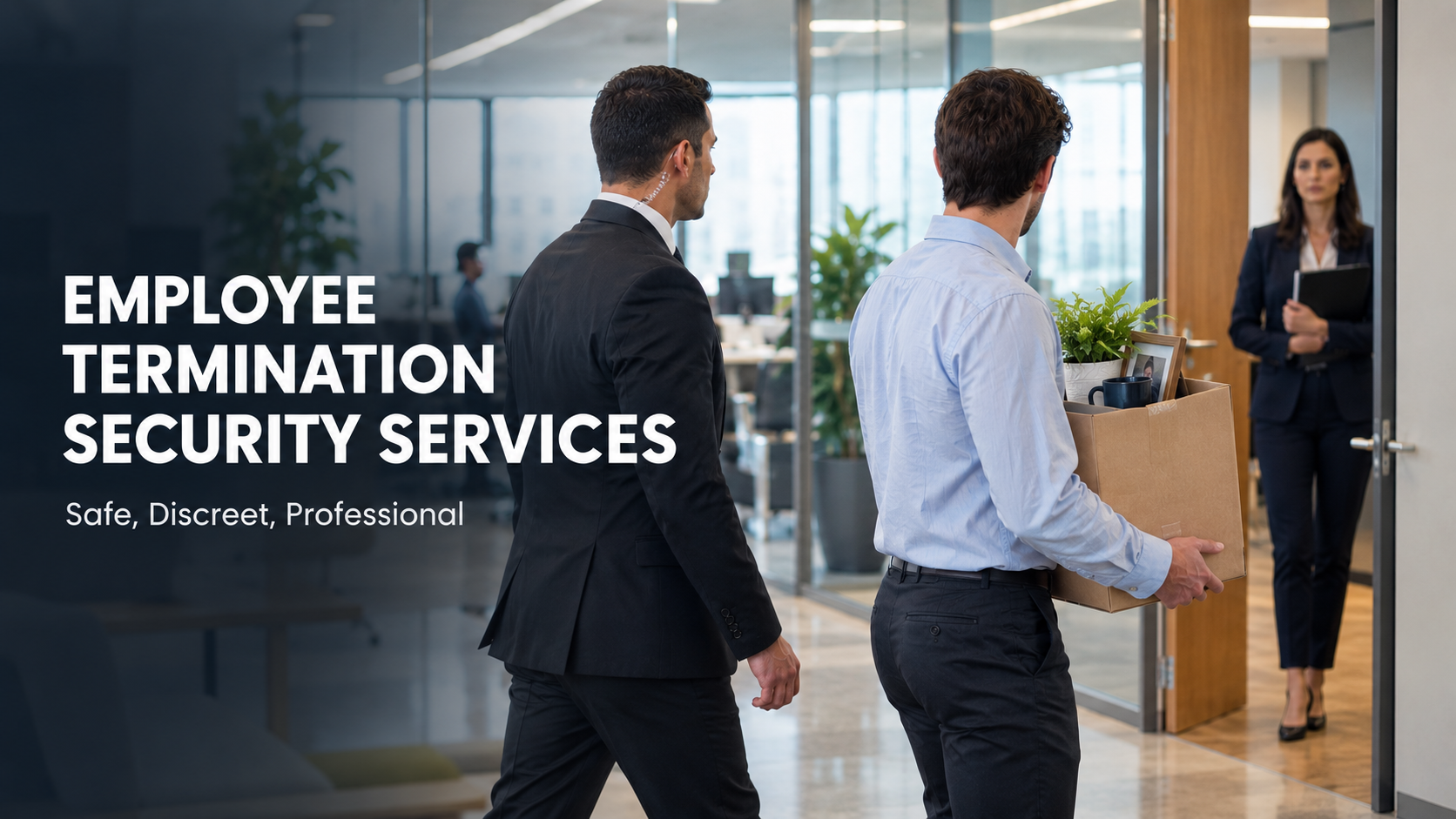
- Humiliating exits. Walking someone past a full office with a cardboard box turns a private event into a public one.
- Leaving access live “just until the end of the day.” This is the single most common failure.
- Letting the manager handle it alone. The person closest to the situation shouldn’t also carry it solo.
- Skipping the plan because it feels like overkill. Nobody has ever regretted a plan they didn’t need.
- Treating legal and security as separate tracks. They should be in the same room, or at least on the same call.
Frequently asked questions
Should security be present during a high risk employee termination?
Often yes, but usually outside the room, not in it. A guard inside the meeting can feel confrontational and may escalate things. For Tier 3 situations, or when immediate danger is likely, having security in the room is reasonable. The plan should say which approach you’re taking and why.
What’s the best day and time for a high risk employee termination?
There’s no universal answer. Early in the week leaves time for follow-up and support. Late in the day means fewer coworkers around. Avoid Friday afternoons: the person has a long weekend with no structure, and you have no way to check in.
How long should the meeting take?
About ten minutes. Longer meetings tend to turn into arguments, and arguments are what you’re trying to avoid.
What should I do if the employee threatens someone?
End the meeting, leave the room, and call security or law enforcement. Document the exact statements as soon as you’re safe. Don’t try to resolve it yourself.
Do I need a lawyer involved?
For Tier 2 and Tier 3, yes. Termination law varies by state, and threats, protective orders, and data issues each raise their own questions. Your employment attorney should see the plan before the meeting happens.
Can a small business afford high risk employee termination planning?
Most of it costs nothing but time: the risk tier, the timeline, the room setup, the access shutoff. The paid part, professional security, is only needed when the risk justifies it, and it’s usually hired for a single event, not long term.
Need help with high risk employee termination planning?
If you’ve got a termination coming up and want to talk through the setup, request a quote and tell us the site, the timing, and what’s worrying you. We’ll tell you plainly whether you need a guard on site or just a tighter plan.