How Much Does an Unarmed Security Guard Make? A Complete Salary Guide
If you’re thinking about a career in security, the first question that usually comes up is simple: how much does an unarmed security guard make? The honest answer is, it depends. Where you work, how much experience you have, the type of property you’re assigned to, your shift schedule, and the company you work for all play a role in what ends up on your paycheck.
In the United States, salary estimates for unarmed security guards vary depending on the source. ZipRecruiter puts the average at around $35,594 a year, or about $17.11 an hour, based on data from September 2026. The U.S. Bureau of Labor Statistics reports a median annual wage of $38,020 for security guards, using May 2025 figures. These numbers don’t match exactly because they come from different data sets and methods, but together they give a fairly realistic picture of what security professionals can expect to earn when people ask how much does an unarmed security guard make.
So there’s no single number that applies to every unarmed guard out there. Understanding what actually moves the needle on pay can help you judge job offers more accurately and plan your career with a clearer head.
How Much Does an Unarmed Security Guard Make Per Year?
Based on current ZipRecruiter data, unarmed security guards in the U.S. earn roughly $35,594 a year on average, which breaks down to about $17.11 an hour or close to $2,966 a month. Their reported range puts the 25th percentile around $32,000 and the 75th percentile closer to $37,500 annually. That said, these figures shouldn’t be treated as a guaranteed number. Security guard salary can shift quite a bit depending on the local job market and the specifics of the role itself.
The BLS offers another angle worth looking at. Their May 2025 data shows a median annual wage of $38,020 for security guards, with the bottom 10 percent earning under $30,210 and the top 10 percent making more than $58,840. Keep in mind this figure covers the broader security guard occupation rather than splitting out armed and unarmed roles separately, so it’s best treated as general industry data rather than an unarmed-specific number.
This is part of why you’ll see different answers when people search how much does an unarmed security guard make online. Some sites focus specifically on unarmed security guard pay, while government sources tend to report on the security guard occupation as a whole.
How Much Does an Unarmed Security Guard Make Per Hour?
For a lot of people job-hunting, hourly pay tells you more than an annual number, especially since most security roles are paid by the hour anyway. Current ZipRecruiter figures put average unarmed security guard hourly pay at roughly $17.11 in the U.S. Most salaries land somewhere within a fairly wide band, and where exactly you fall depends on your employer, location, experience level, and what the job actually requires. For comparison, the BLS reports a median security guard hourly wage of about $18.28, based on May 2025 numbers. Again, that’s for the security guard occupation broadly and shouldn’t be read as the exact rate for every unarmed position out there.
When you’re comparing hourly rates between job offers, it also helps to look past the number itself. A job offering a slightly higher rate might come with fewer guaranteed hours, while a lower hourly rate somewhere else might actually come with steadier scheduling or better benefits attached.
How Much Does an Unarmed Security Guard Make in California?
California is one of the bigger markets for security work, and pay here can swing quite a bit depending on where exactly you’re located.
The California Employment Development Department reports a median hourly wage of $21.32 for security guards statewide during the first quarter of 2026, with the 25th percentile sitting at $18.33 and the 75th percentile at $23.05. Like the BLS numbers, this covers the security guard occupation broadly rather than unarmed guards specifically. That distinction matters more than it might seem. Someone researching unarmed security guard salary in California might come across a lower national average from a job site, while state-level data for all security guards shows a noticeably higher number. Neither figure is wrong, they’re just measuring slightly different groups.
Pay also shifts from one part of California to another. The San Francisco-San Mateo-Redwood City metro area, for example, reported a median hourly wage of $22.26 for security guards in that same quarter, according to EDD data. It’s a good reminder that location is one of the single biggest factors in security guard pay per hour. If you’re browsing unarmed security guard jobs in California, it’s worth comparing offers based on local wage data, the actual schedule, day-to-day responsibilities, and the employer itself, rather than leaning on one statewide or national average.
What Factors Affect How Much an Unarmed Security Guard Makes?
Two guards doing similar work can still end up with pretty different paychecks. Whenever someone asks how much does an unarmed security guard make, the honest answer usually comes down to a mix of the following:
- Experience and work history — Someone new to the field typically starts with an entry-level post, while a more experienced guard may qualify for roles with greater responsibility or tougher environments. Experience also builds practical skills employers care about, like incident reporting, access control, surveillance monitoring, and staying calm under pressure. That said, more years on the job doesn’t automatically mean higher pay; it still depends on the specific role and local market.
- Location — Where you work can shift your pay significantly. Guards in areas with higher labor costs or stronger demand for security services often see different wage levels than guards in smaller markets. Even within the same state, pay can vary a lot between metro areas, as the California numbers above show.
- Type of assignment — An unarmed guard might work an office building, retail store, residential property, warehouse, construction site, healthcare facility, hotel, or event venue, and the day-to-day work looks different at each one. One job might mostly involve access control and greeting visitors, while another leans heavily on patrols, CCTV monitoring, and detailed incident reports. The responsibilities attached to a role tend to shape what an employer is willing to pay.
- Shift and hours — Security is basically a 24-hour need. The BLS notes shifts are typically around eight hours, with rotating schedules and overnight work being common. Pay structure for different shifts depends entirely on the employer, some offer a bump for less desirable hours, others don’t. It’s worth checking the actual offer rather than assuming a night shift automatically pays more.
- Training and skills — Employers often look for candidates familiar with access control, patrol procedures, emergency response, communication, surveillance systems, and documentation. Licensing requirements vary by state too. The BLS notes most security guards need a high school diploma or equivalent as a baseline, with state-specific licensing on top of that.
Does Experience Really Increase Pay for Unarmed Guards?
Experience tends to open doors more than it directly bumps a paycheck. A new guard might start with a fairly basic assignment, then build experience across access control, patrols, surveillance, event security, and incident response over time. As guards get more comfortable with procedures and sharpen their communication and observation skills, they often become eligible for roles with more responsibility, things like experienced security officer, senior officer, security supervisor, site supervisor, or operations-focused positions.
Worth noting: the BLS reports a May 2025 median annual wage of $55,940 for first-line supervisors of security workers. That’s a separate occupation with real supervisory duties attached, so it shouldn’t be confused with a standard unarmed guard’s salary, but it does show where the career path can eventually lead.
Does Training Actually Boost Pay?
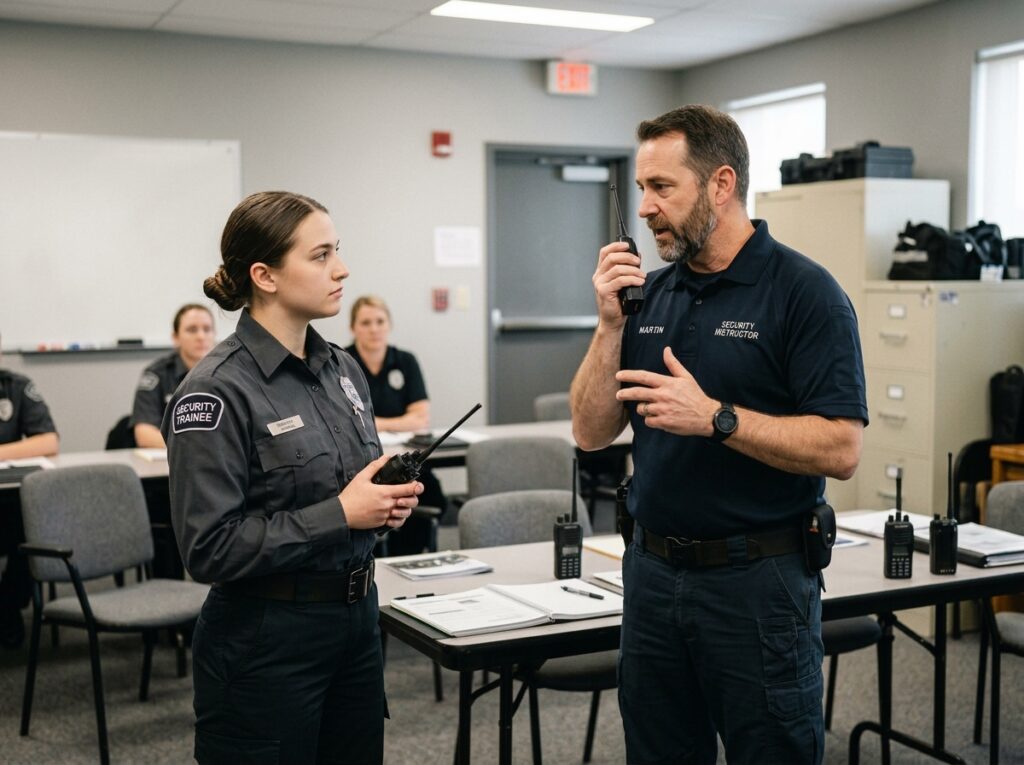
Training doesn’t come with an automatic pay bump, but it does widen the range of jobs you’re qualified for. A well-trained guard tends to handle access control, suspicious activity, emergencies, reporting, and customer interactions more confidently, which matters to employers assigning people to commercial buildings, construction sites, warehouses, healthcare facilities, residential communities, retail locations, or event venues. If security is a career you’re planning to stick with long-term, it’s more useful to think of training as something that expands what you’re capable of doing, rather than a guaranteed shortcut to a higher hourly rate.
Unarmed vs. Armed Security Guard Pay
A question that comes up a lot: do armed guards make more than unarmed ones? Current ZipRecruiter estimates put average armed security guard pay at around $41,144 a year, compared to roughly $35,594 for unarmed guards. These numbers come from job listing data rather than a fixed, guaranteed gap that applies everywhere, but the general trend holds. Armed positions also come with extra responsibility and often different training or licensing requirements depending on the state. For someone just starting out, an unarmed role can be a solid way to build real experience before deciding whether to move into armed work or another specialized security path.
What Does an Unarmed Security Guard Actually Do?
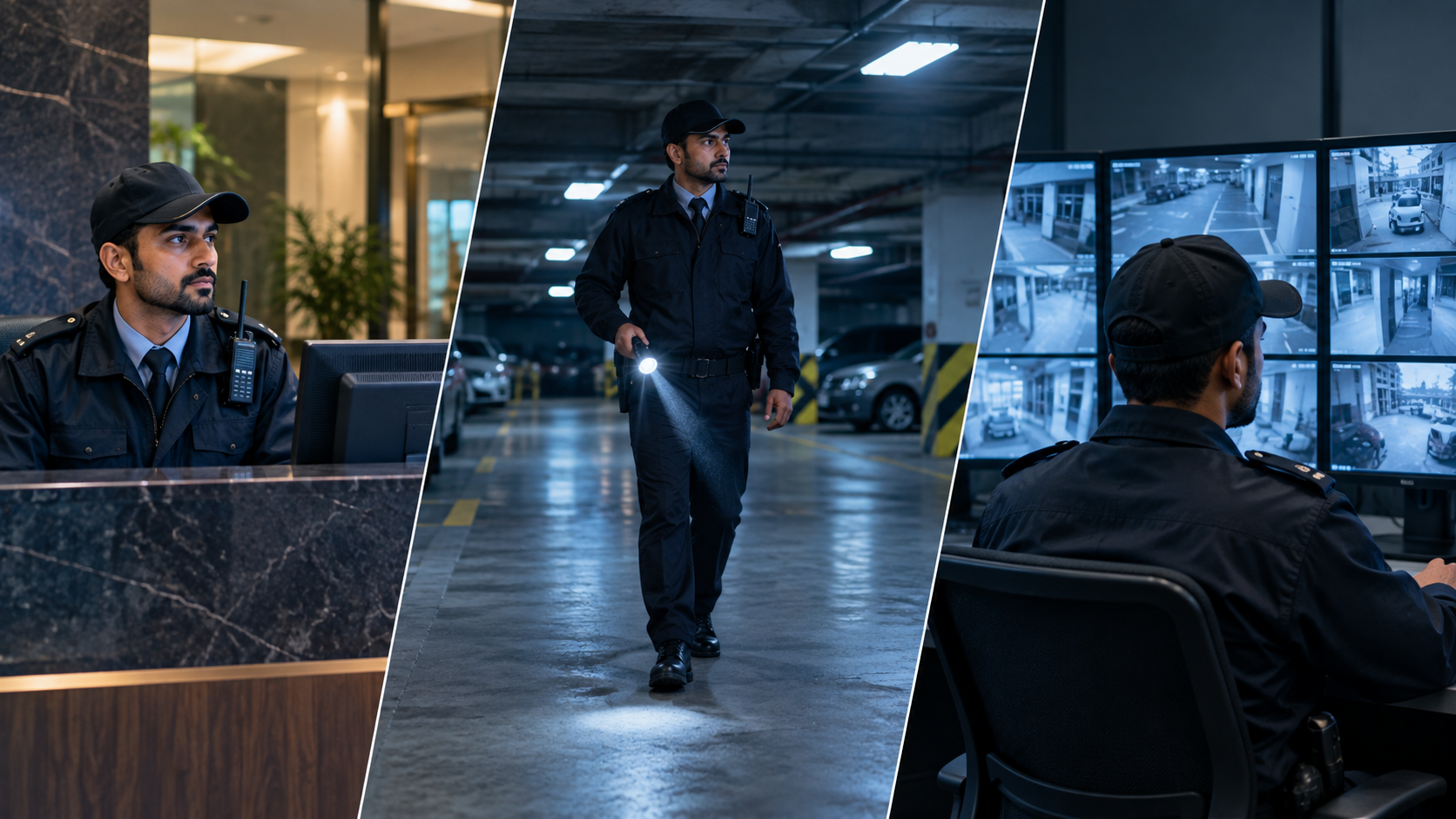
The job goes well beyond standing at a door or walking a loop around a parking lot. Depending on the site, responsibilities can include:
- Monitoring entrances and exits
- Checking credentials or managing visitor access
- Patrolling assigned areas
- Monitoring surveillance systems
- Watching for and reporting suspicious activity
- Writing incident reports
- Responding to security incidents as they happen
- Communicating with supervisors or emergency services when needed
- Following whatever procedures are specific to that site
Exact duties depend heavily on the property and the employer. A guard at a retail store deals with a very different day than someone posted at a construction site or an office building.
Is Unarmed Security a Good Career Option?
For anyone interested in protective services, unarmed security work is a practical entry point into the industry. It exposes you to different environments, offices, warehouses, retail stores, hospitals, hotels, residential communities, construction sites, event venues, and helps build professional skills you can carry forward. It’s also worth being realistic about the demands. The work can involve long stretches of standing or walking, changing schedules, overnight shifts, and situations that call for patience and good judgment under pressure.
The BLS projects around 157,200 openings a year on average for security guards and gambling surveillance officers between 2025 and 2035, with most of that driven by people leaving the field or moving into other roles. That’s a solid amount of opportunity, but it also means it’s worth weighing both the pay and the actual working conditions before signing on.
How to Find Unarmed Security Guard Jobs
Don’t compare job offers on hourly pay alone. Look at the full picture of what’s being asked of you and what you’re getting in return:
- Hourly wage
- Expected weekly hours
- Shift schedule
- Overtime policy
- Location and commute
- Day-to-day responsibilities
- Required training or licensing
- Benefits, if any are offered
- Room to take on more responsibility down the line
You can find openings through security companies, job boards, local employers, and company career pages. Applying directly to a reputable security guard company is often a good way to learn what’s actually available in your area, and what kind of sites they typically staff. Professional security guard services often cover a range of industries, so knowing what type of site you’d prefer, retail, corporate, industrial, residential, can help narrow down your search a lot faster.
How Much Does an Unarmed Security Guard Make: Frequently Asked Questions
How much does an unarmed security guard make in California specifically? California EDD reports a first-quarter 2026 median hourly wage of $21.32 for security guards statewide, though this covers the broader occupation rather than unarmed roles specifically, and can run higher in metro areas like the Bay Area.
Does more experience guarantee higher pay? Not automatically. Experience can qualify you for roles with more responsibility, but actual pay still comes down to the employer, location, and assignment.
Are overnight shifts common in unarmed security? Yes. Since security coverage is often needed around the clock, rotating and overnight shifts are a normal part of the industry.
Can an unarmed guard move into other security roles over time? Yes, with enough experience, training, and any required licensing, guards can move into supervisory roles or more specialized security positions.
Final Thoughts on How Much an Unarmed Security Guard Makes
So, how much does an unarmed security guard make? There’s no single figure that fits every guard. Current U.S. estimates place typical pay in the mid-$30,000 range annually, while broader government data puts the median security guard salary closer to $38,020. California tends to run higher than the national average, but even within the state, pay still shifts based on area, employer, assignment, and experience. If you’re weighing a career in security, look past the advertised hourly number. The type of assignment, schedule, training requirements, environment, and room for growth all factor into whether a job is actually a good fit.
For businesses on the other side of this, choosing the right unarmed security services matters just as much. Whether it’s an office, construction site, retail property, warehouse, residential community, or event, the right security guard company should be selected based on what the specific site actually needs, not just the lowest quote on the table.