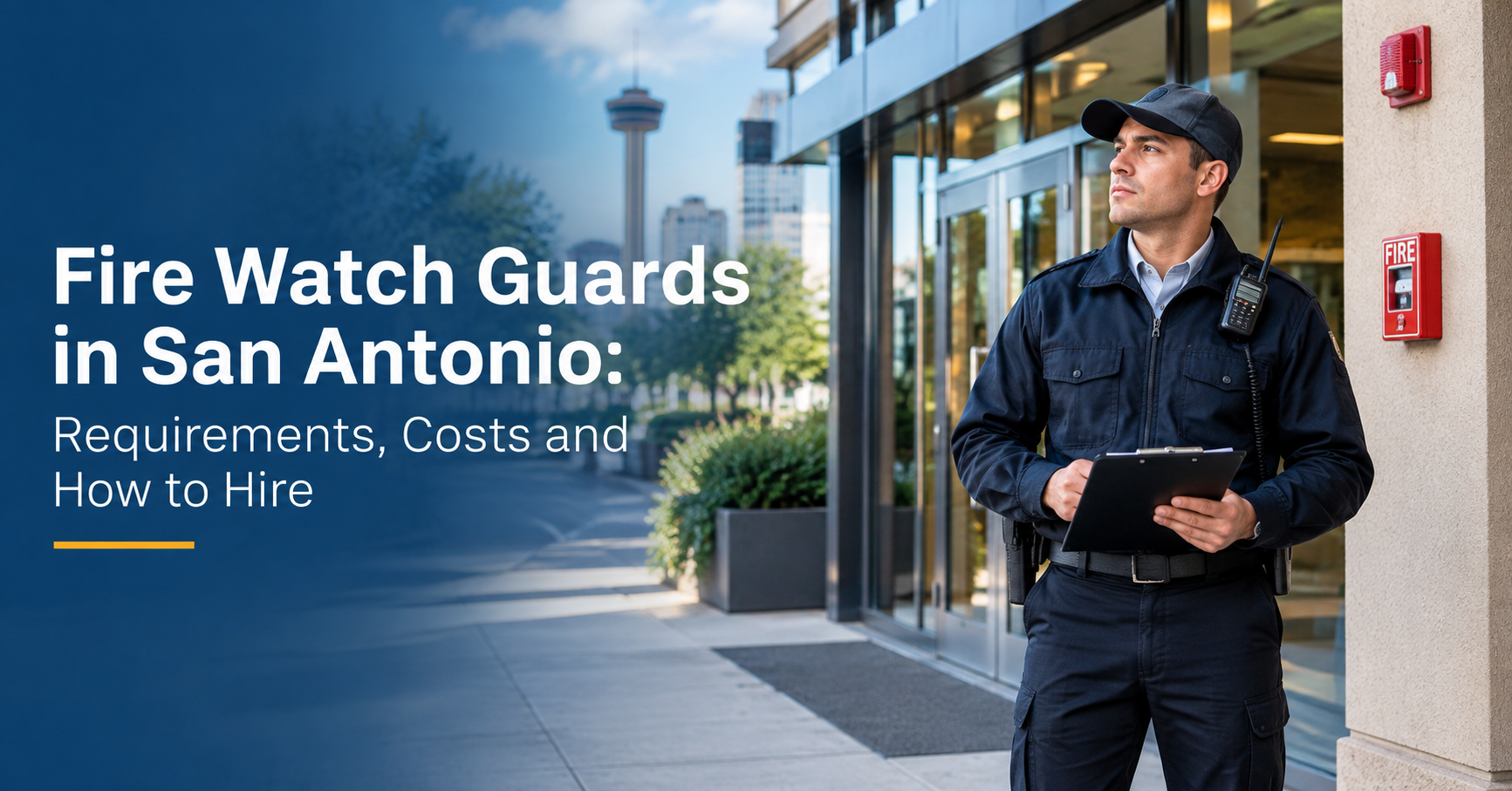
When a fire alarm system stops working, a sprinkler system is temporarily unavailable, or construction work creates additional fire hazards, property owners may need to arrange fire watch services to help protect occupants and property. Finding reliable San Antonio fire watch guards can help businesses maintain active fire-safety monitoring while addressing an impairment or other identified risk.
Fire watch services involve trained personnel who patrol designated areas, watch for signs of fire, document observations, and follow established emergency procedures. Depending on the situation, fire watch may be required by the local fire authority, an applicable fire code, a permit condition, or another relevant safety requirement.
For commercial property managers, construction contractors, hotel operators, facility managers, and event organizers, understanding when fire watch is needed, how the service works, and what affects its cost is essential.
This guide explains fire watch services in San Antonio, including common situations that may require monitoring, local compliance considerations, pricing factors, and practical steps for choosing a provider.
What Are Fire Watch Guards in San Antonio?
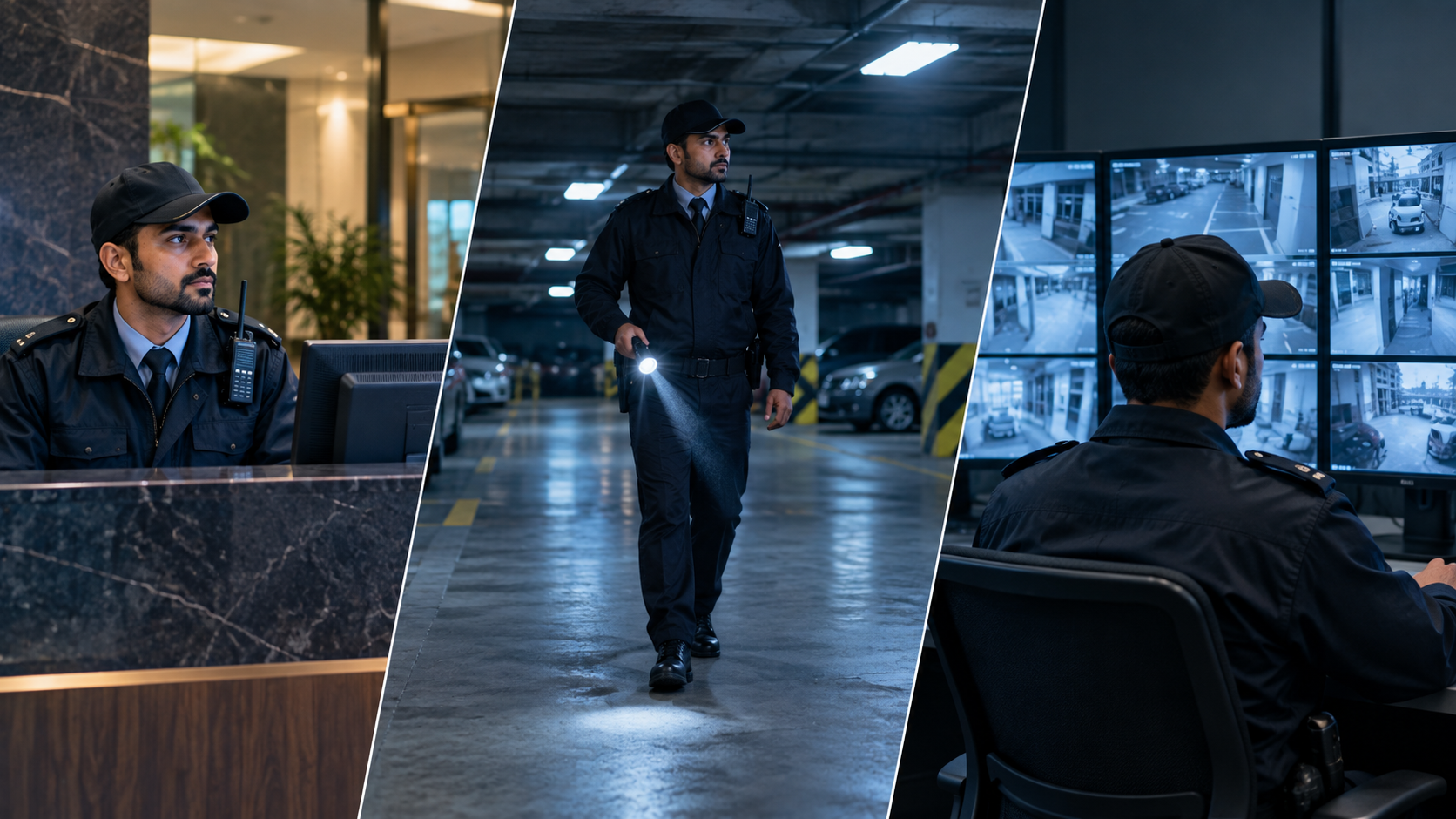
Fire watch guards are personnel assigned to monitor a property or designated area for fire hazards when additional observation is needed. They provide a visible, organized safety presence and follow the procedures established for the specific assignment.
Unlike a general security assignment, fire watch focuses on identifying potential fire incidents and initiating the appropriate response. Guards may inspect designated areas, monitor hot work, observe conditions around impaired fire protection systems, and maintain written patrol records.
Professional fire watch services may be appropriate for:
Commercial buildings with temporarily impaired fire alarm systems.
Properties experiencing sprinkler system maintenance or unexpected failures.
Construction sites where hot work or other activities create fire risks.
Hotels, apartment buildings, and high-rise properties with affected life-safety systems.
Special events involving temporary structures or elevated fire hazards.
Industrial and commercial facilities undergoing maintenance, repairs, or equipment replacement.
The precise duties, patrol frequency, staffing levels, and duration depend on the circumstances and any applicable instructions from the authority having jurisdiction (AHJ).
Businesses seeking fire watch services in San Antonio should communicate the reason for the assignment, the property’s occupancy, the affected systems, and any instructions already received from the fire department.
When Is Fire Watch Required in San Antonio?
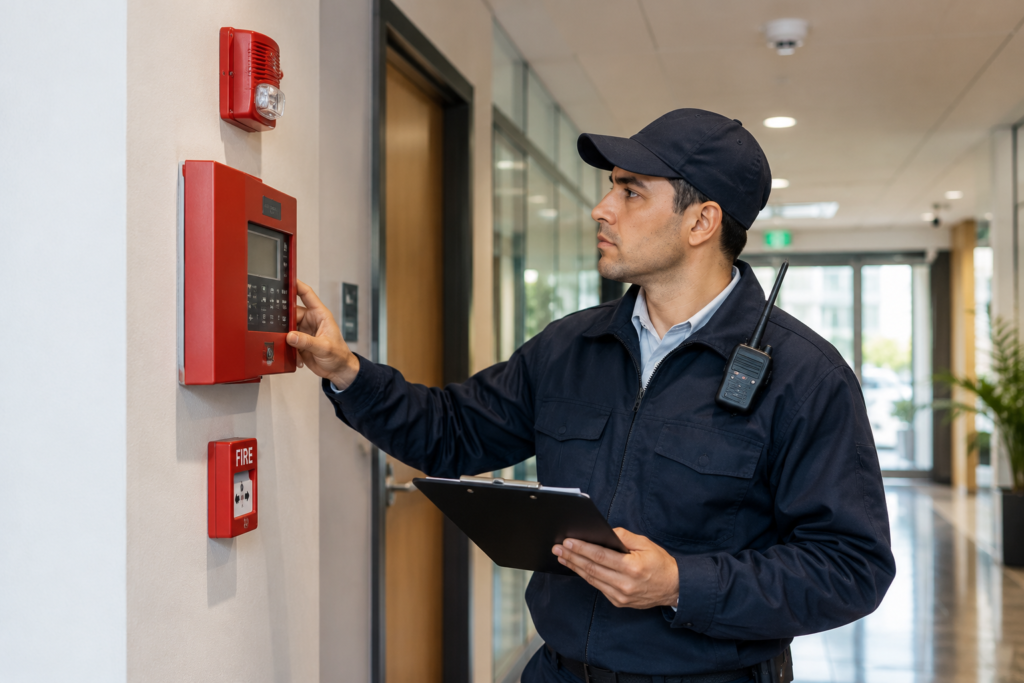
Fire watch may be required when a fire protection system is impaired or when a specific activity creates a fire hazard that requires additional monitoring. However, not every alarm fault, maintenance visit, or construction activity automatically requires the same response.
The applicable fire code, the type and extent of the impairment, occupancy conditions, and instructions from the local fire authority all matter.
San Antonio’s fire code information is published through the City of San Antonio Fire Department’s Fire Codes and Standards resources.
1. Fire Alarm System Failure
A fire alarm system helps occupants receive warnings and supports an organized emergency response. If a required system becomes unavailable, occupants may lose an important layer of fire protection.
Depending on the circumstances, a fire watch may be required while the system is being repaired or restored. Property management should report the impairment through the appropriate channels, arrange qualified repair work, and confirm the necessary interim safety measures with the responsible fire authority.
2. Sprinkler System Impairment
Automatic sprinklers help control or suppress fires. When a required sprinkler system or a significant portion of it is out of service, a building may face increased risk.
Fire watch requirements can depend on the affected area, the duration of the impairment, the building’s use, and the instructions of the local authority. A property manager should not assume that a standard staffing arrangement or patrol schedule will satisfy every situation.
3. Construction and Renovation
Construction and renovation projects can introduce temporary hazards, including exposed combustible materials, electrical work, equipment use, and hot work.
A designated fire watch may be necessary where the project conditions, permit requirements, or applicable safety rules call for it. The contractor should establish clear responsibilities for monitoring, communication, and incident reporting before work begins.
4. Welding, Cutting, and Other Hot Work
Hot work can produce sparks, heat, and molten material capable of igniting nearby combustibles. Some fires develop after the immediate work has stopped, when residual heat ignites surrounding materials.
Fire watch arrangements should reflect the activity, nearby combustible materials, concealed spaces, and the applicable permit or safety procedure. Post-work monitoring should follow the governing requirements rather than an assumed universal duration.
5. High-Risk or Special Occupancies
Hotels, apartment buildings, healthcare facilities, assembly venues, and other occupied properties may have additional life-safety considerations.
If a required protection system becomes impaired, the presence of sleeping occupants, vulnerable people, or large crowds can affect the risk assessment and the instructions issued by the authority having jurisdiction.
For a more detailed explanation of triggering situations, the supporting article should cover [fire watch requirements in San Antonio].
Important: Confirm the specific requirements for your property with the San Antonio Fire Department or the responsible fire-code official. Do not treat general industry guidance as a substitute for a property-specific determination.
San Antonio Fire Watch Requirements and Local Compliance
Fire watch arrangements should be based on applicable requirements and the actual conditions at the property. Building owners and managers should establish what has failed, which occupants or areas are affected, and what temporary measures are required.
The City of San Antonio identifies the 2024 International Fire Code, together with local amendments, as its adopted fire-code framework. The applicable provisions and local amendments should be checked for the specific situation.
The city’s Fire Codes and Standards page is a useful starting point for reviewing official information.
Confirm the Required Response
When a fire protection system is impaired, property management should:
Identify the affected alarm, sprinkler, or other fire protection system.
Determine the extent of the impairment and which areas are affected.
Notify the appropriate personnel and authorities as required.
Obtain instructions concerning evacuation, fire watch, or other interim measures.
Arrange the required staffing and communicate the assignment’s boundaries.
Coordinate repairs and document the steps taken to restore protection.
The appropriate response may differ between a limited maintenance issue and a substantial impairment affecting an occupied building. Do not delay urgent protective action while waiting for a private contractor to arrive.
Patrol Frequency and Documentation
Patrol frequency should follow the applicable requirements and the fire authority’s instructions. A provider should be able to explain how it will cover the assigned areas, communicate an incident, and record its observations.
San Antonio’s published Fire Watch Requirements guidance describes local assignment expectations, including patrol intervals for certain occupancy types. Because requirements can be assignment-specific, verify the current instructions with the Fire Marshal before relying on a particular interval.
A practical fire watch record may include:
Date and time of each patrol.
Guard identification and assigned area.
Areas inspected and conditions observed.
Fire hazards or unusual conditions identified.
Notifications and corrective actions taken.
Incident details and shift handover information.
Records should be accurate, completed at the required intervals, and made available to the appropriate property representative or authority when requested.
For additional detail, the related article on San Antonio Fire Department fire watch procedures, notifications, and fees should address local processes separately.
What Happens When a Fire Alarm or Sprinkler System Is Out of Service?
An impaired fire protection system can change the safety conditions inside a building. The correct response depends on the system affected, the extent of the problem, occupancy conditions, and the instructions of the responsible authority.
Property managers should not automatically assume that hiring a guard resolves every compliance obligation.
Step 1: Identify and Report the Impairment
Determine whether the issue involves a fire alarm, sprinkler system, standpipe, or another required component. Notify the responsible building personnel, service contractor, and authorities as required by the applicable procedure.
Step 2: Establish Interim Safety Measures
The responsible authority may require an approved fire watch, evacuation, or another protective arrangement. The decision should account for the level of risk and the occupants who may be affected.
Step 3: Arrange the Required Coverage
If fire watch is directed or otherwise required, confirm the number of personnel, patrol boundaries, communications arrangements, and reporting procedure.
Step 4: Repair and Restore the System
Coordinate repairs with appropriately qualified technicians. A fire watch is an interim measure, not a replacement for a required alarm or sprinkler system.
Step 5: Confirm When Fire Watch Can End
Do not end an assigned fire watch solely because a repair technician has finished work. Confirm that the system has been restored as required and that the responsible authority’s conditions for ending the assignment have been satisfied.
The related article on fire alarm and sprinkler impairment fire watch rules should explain the specific impairment process and the importance of verifying any time-based requirements before publication.
How Much Do Fire Watch Guards Cost in San Antonio?
The cost of fire watch services in San Antonio depends on the assignment. Staffing requirements, service duration, urgency, property layout, and the level of documentation can all affect the final quotation.
There is no single price that should be assumed to apply to every building or situation. Published provider estimates can differ substantially, so property managers should compare quotations using consistent assumptions.
Factors That Affect Fire Watch Pricing
Number of guards: A large building or property with several separate patrol areas may require multiple personnel to provide adequate coverage.
Duration of the assignment: Short-term maintenance coverage and continuous overnight or multi-day assignments have different staffing and scheduling requirements.
Urgency: An unexpected system failure may require rapid mobilization, including after-hours coordination. Any additional charges should be stated clearly.
Property size and layout: Multiple floors, restricted areas, large industrial spaces, and complex access arrangements may increase the time needed for patrols.
Occupancy and risk: The building’s use and the applicable instructions may affect the number of guards, patrol intervals, and supervision required.
Documentation and reporting: Some assignments require detailed patrol records, incident reports, shift handovers, or coordination with site management.
How to Calculate the Estimated Cost
A straightforward starting point is:
Estimated guard labor cost = Hourly rate × Number of guards × Billable hours
For example, assume a hypothetical quotation of $40 per guard-hour for one guard working an eight-hour shift.
Hourly rate: $40
Number of guards: 1
Duration: 8 hours
Estimated labor cost: $320
This is an illustrative calculation, not a verified current San Antonio market rate or an actual provider quotation. Taxes, travel, minimum booking periods, after-hours charges, supervision, and other fees may change the total.
For continuous coverage, calculate the required staffing across the entire period rather than multiplying a single eight-hour shift without checking shift changes, rest requirements, and coverage arrangements.
Questions to Ask About the Quote
Before accepting a quotation, confirm:
Is the rate charged per guard-hour or for the entire assignment?
Is there a minimum number of hours?
Are emergency, overnight, weekend, or holiday charges applicable?
Does the price include supervision and patrol documentation?
How are shift changes handled?
What happens if the assignment needs to continue beyond the original end time?
Are taxes or other additional charges included?
A transparent quote should state the assumptions behind the price and explain how changes to staffing or duration affect the total.
For more detailed pricing guidance, see the planned supporting article, [Fire Watch Guard Cost in San Antonio].
How to Hire Fire Watch Guards in San Antonio
Choosing a fire watch provider is about more than finding the lowest hourly rate. The provider must understand the assignment, be able to supply suitable personnel, and follow the requirements established for the property.
Use the following checklist when evaluating potential providers.
1. Explain the Reason for Fire Watch
Tell the provider whether the assignment concerns a failed alarm, an impaired sprinkler system, hot work, construction, or another identified risk.
Include the property address, occupancy type, affected areas, expected duration, and any instructions received from the fire authority.
2. Confirm Experience With Similar Properties
Ask whether the provider has handled comparable assignments involving commercial buildings, hotels, apartment properties, industrial facilities, or construction projects.
Experience should be relevant to the actual risks and responsibilities involved.
3. Verify Licensing Where Applicable
Texas regulates private security activities through the Department of Public Safety under the Texas Occupations Code, Chapter 1702.
Whether a particular fire watch arrangement falls within private security licensing requirements depends on the services being provided and the applicable rules. Do not assume that every fire watch assignment automatically requires the same license—or that no license is necessary.
Review the Texas Department of Public Safety’s Private Security resources and confirm the provider’s applicable credentials.
4. Ask About Guard Training
Ask how personnel are prepared for the assignment, including fire hazard recognition, emergency notification, patrol procedures, incident documentation, and site-specific instructions.
Clarify whether the provider can meet any additional qualifications required by the fire authority or property owner.
5. Confirm Availability and Deployment
For urgent assignments, explain the required start time and ask the provider to confirm whether it can meet it.
Obtain a clear commitment rather than relying on general claims about 24/7 availability or a standard response time.
6. Review Insurance and Contract Terms
Request relevant insurance documentation and review the service agreement. Confirm responsibility for staffing, supervision, incident reporting, replacement personnel, cancellation, and extensions.
7. Agree on Patrol Procedures
The provider should understand the areas to inspect, the required patrol schedule, the reporting method, the emergency contact process, and any site-specific hazards.
8. Confirm Documentation
Ask to see a sample patrol log or report. A structured record makes it easier for site management to review coverage and follow up on identified hazards.
9. Understand the Full Price
Compare the total cost using the same number of guards, hours, and service assumptions. A low hourly rate may not represent the lowest overall cost if minimum hours or additional fees apply.
10. Confirm Who Can Authorize the End of Service
Establish the process for ending fire watch when the impairment is corrected or the activity is complete. Follow the instructions of the responsible authority and do not discontinue required coverage prematurely.
For a more detailed selection process, the supporting article on how to hire a fire watch guard in San Antonio should expand these checks into a practical procurement checklist.
Emergency Fire Watch Services in San Antonio
Some fire watch needs arise unexpectedly. An alarm system may fail outside business hours, a sprinkler impairment may occur during maintenance, or a construction activity may require additional coverage before work can proceed.
In these circumstances, property managers need a clear process for arranging appropriate coverage without overlooking immediate safety responsibilities.
When seeking emergency fire watch services:
Identify the problem and the affected parts of the property.
Contact the responsible building personnel and authorities as required.
Follow any immediate evacuation or protective instructions.
Explain the assignment, start time, location, and expected duration to potential providers.
Confirm staffing, arrival arrangements, patrol requirements, and pricing.
Maintain required interim measures until the responsible authority permits the assignment to end.
Do not assume that a provider’s advertised availability guarantees immediate deployment. Confirm the actual start time and whether the provider can meet the property’s specific requirements.
Emergency fire watch may involve after-hours scheduling, additional coordination, and longer coverage periods. Ask for these costs and arrangements in writing whenever circumstances allow.
The dedicated [Emergency Fire Watch in San Antonio] page should cover same-day requests, urgent system impairments, and 24-hour coverage in greater detail.
Fire Watch for Construction Sites and Hot Work
Construction and industrial environments may involve welding, cutting, grinding, temporary electrical installations, and combustible materials. These conditions can create ignition risks that require additional precautions.
Fire watch responsibilities should be established before the relevant work starts. The contractor or site manager should identify who is responsible for monitoring, how hazards will be reported, and what happens if conditions become unsafe.
Hot Work Monitoring
Hot work fire watch may involve observing the work area for sparks, smoke, smoldering materials, or other indications of ignition. Depending on the job, monitoring may also need to consider adjacent rooms, concealed spaces, or the opposite side of a wall or floor.
The applicable permit and safety requirements should establish when monitoring begins, what areas are covered, and how long post-work observation continues.
Do not assume that one post-welding duration applies to every hot work activity. Confirm the relevant standard, permit conditions, and site-specific instructions.
Construction Site Coverage
Construction fire watch arrangements may need to account for changing site layouts, temporary materials, multiple work crews, and areas where fire protection systems are incomplete or impaired.
The service plan should identify patrol boundaries, communication channels, emergency access arrangements, and responsibilities for reporting hazards.
See the planned supporting pages on construction site fire watch in San Antonio and hot work fire watch requirements for more focused guidance.
Fire Watch for Hotels, Apartments, High-Rises, and Events
Different property types present different operational challenges. The appropriate arrangement depends on the occupancy, the hazards involved, the systems affected, and any applicable instructions.
Hotels and Apartment Buildings
Sleeping occupants may not immediately recognize a developing fire or hear an ordinary warning. Where a required life-safety system is impaired, the responsible authority may specify additional precautions or a particular patrol schedule.
Property managers should communicate the affected areas, occupant considerations, access arrangements, and emergency procedures to the provider.
High-Rise Buildings
High-rise properties may have extensive floor plans, multiple stairwells, plant rooms, and complex fire protection systems. The assignment should clearly define patrol coverage and how guards will communicate with building management.
Coverage must reflect the actual areas and responsibilities specified for the assignment.
Special Events and Temporary Structures
Events, temporary stages, exhibition spaces, and other temporary structures can involve electrical equipment, cooking activities, generators, combustible decorations, or temporary construction.
Where fire watch is required, event organizers should coordinate the assignment with the applicable event permit, site plan, and authority instructions.
A dedicated fire watch plan can help clarify responsibilities before attendees arrive.
What Does a Fire Watch Guard Do?
A fire watch guard’s duties are determined by the assignment and applicable requirements. Common responsibilities may include:
Patrolling designated areas at the required intervals.
Observing for smoke, unusual heat, sparks, and other fire hazards.
Checking relevant areas for unsafe conditions.
Keeping required patrol and incident records.
Maintaining an approved means of communication.
Reporting emergencies through the designated procedure.
Following instructions from the responsible authority and site management.
A fire watch guard is not a substitute for a functioning fire alarm or sprinkler system, a fire suppression technician, or the fire department. Guards should not attempt tasks beyond their training or authorization.
Clear responsibilities help ensure that fire watch supports the property’s broader emergency and fire-safety procedures.
How to Choose Between Fire Watch Companies in San Antonio
When comparing fire watch companies, evaluate whether each provider can meet the actual assignment requirements rather than relying on marketing claims alone.
Consider the following:
| Evaluation factor | What to confirm |
|---|---|
| Relevant experience | Similar building types and assignments |
| Licensing | Applicable Texas credentials and authorization |
| Staffing | Required number of guards and shift coverage |
| Procedures | Patrol schedule, communications, and escalation |
| Documentation | Logs, incident reports, and handovers |
| Availability | Confirmed start time and coverage period |
| Pricing | Complete quotation with clear assumptions |
| Insurance | Relevant coverage and contractual responsibilities |
Request written answers to any questions that could affect compliance, safety, or total cost. A professional comparison should explain strengths and limitations fairly instead of relying on unsupported claims that one provider is automatically the best.
Frequently Asked Questions About San Antonio Fire Watch Guards
How quickly can fire watch guards arrive in San Antonio?
Arrival times depend on provider availability, staffing, location, time of day, and assignment requirements. Confirm the actual expected arrival time directly with the provider. Do not rely on an advertised response time unless it is confirmed for your situation.
Is fire watch required when a fire alarm stops working?
It may be required, depending on the impairment, applicable code provisions, occupancy conditions, and instructions from the responsible fire authority. Contact the appropriate authority to determine the necessary interim measures.
How much does fire watch cost per hour in San Antonio?
Pricing varies by staffing, assignment duration, urgency, property conditions, and other contractual factors. Obtain an itemized quote and compare it using the same coverage assumptions.
Do fire watch guards need a Texas security license?
The answer depends on the duties performed and the applicable Texas private security requirements. Verify the provider’s status and any required individual credentials through the Texas Department of Public Safety.
Can fire watch be provided overnight or for 24 hours?
Extended coverage may be available from providers that can staff the assignment appropriately. Confirm the required start and end times, shift changes, continuous coverage, and total price before booking.
How often should fire watch guards patrol a building?
The required frequency depends on the applicable requirements and instructions for the assignment. Confirm the schedule with the responsible fire authority instead of assuming a universal patrol interval.
Can a fire watch guard replace a disabled sprinkler or alarm system?
No. Fire watch is an interim safety measure where required or approved; it does not repair or replace a required fire protection system. Arrange repairs and follow the authority’s instructions for restoring normal protection and ending the watch.
What information should I provide when requesting a quote?
Provide the property address, building type, reason for fire watch, affected areas, required start time, expected duration, any instructions received from the fire authority, and any known staffing or patrol requirements.
Arrange Fire Watch Services in San Antonio
When a property needs fire watch, a clear plan can help management coordinate monitoring, document observations, and respond appropriately to identified fire hazards.
Before arranging service, confirm the requirements for your property, establish the scope of coverage, and compare providers on relevant experience, applicable licensing, staffing, reporting procedures, availability, and transparent pricing.
Need fire watch coverage in San Antonio? Contact a qualified provider to discuss your property, the reason for the assignment, the required start time, and the expected duration. Request a written quotation that explains staffing, patrol arrangements, reporting, and any additional charges.
The right arrangement should match the property’s actual needs and the responsible fire authority’s instructions—not rely on generic promises or assumptions.